
Not Your Grandma's Tennis Game
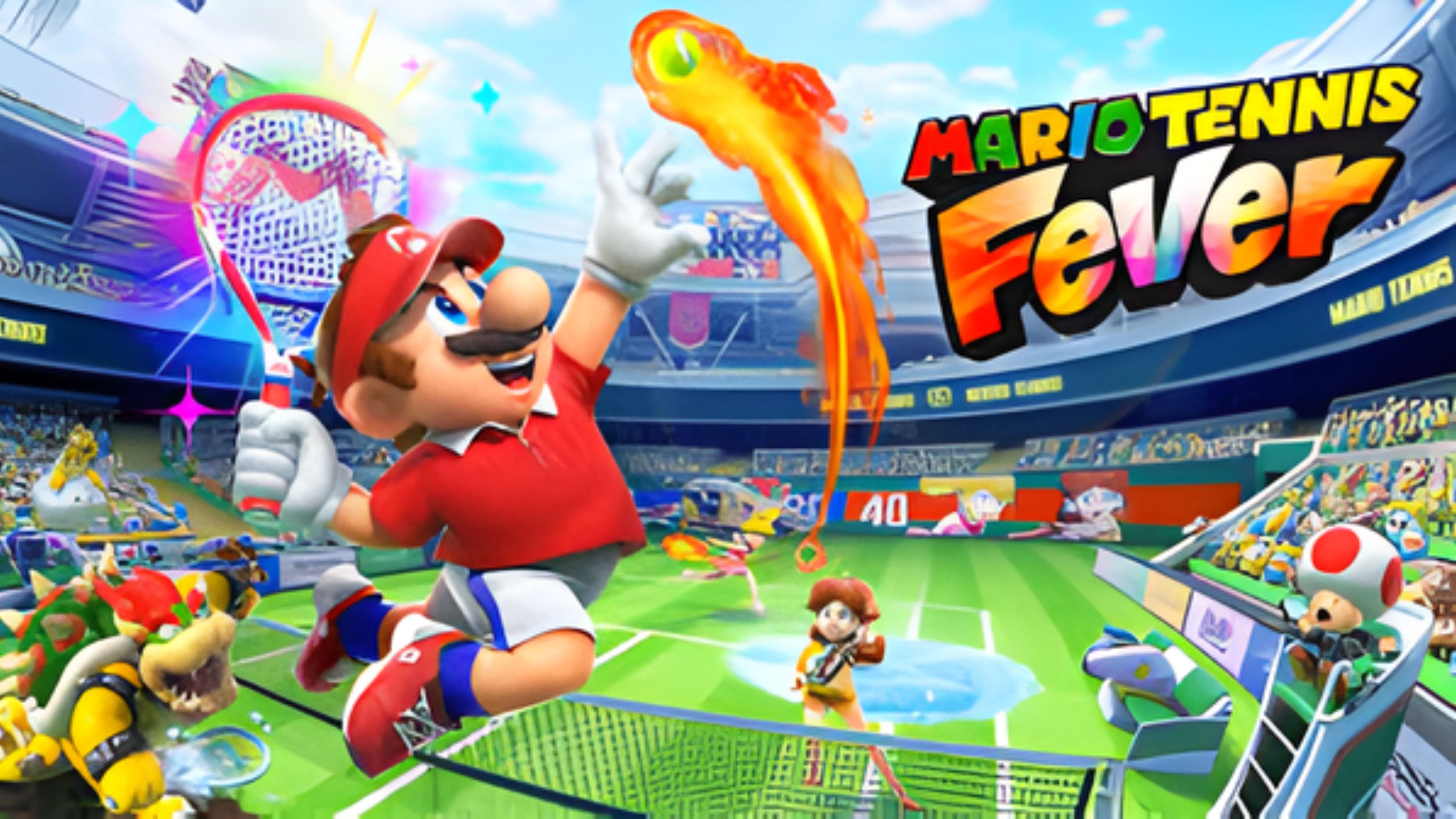
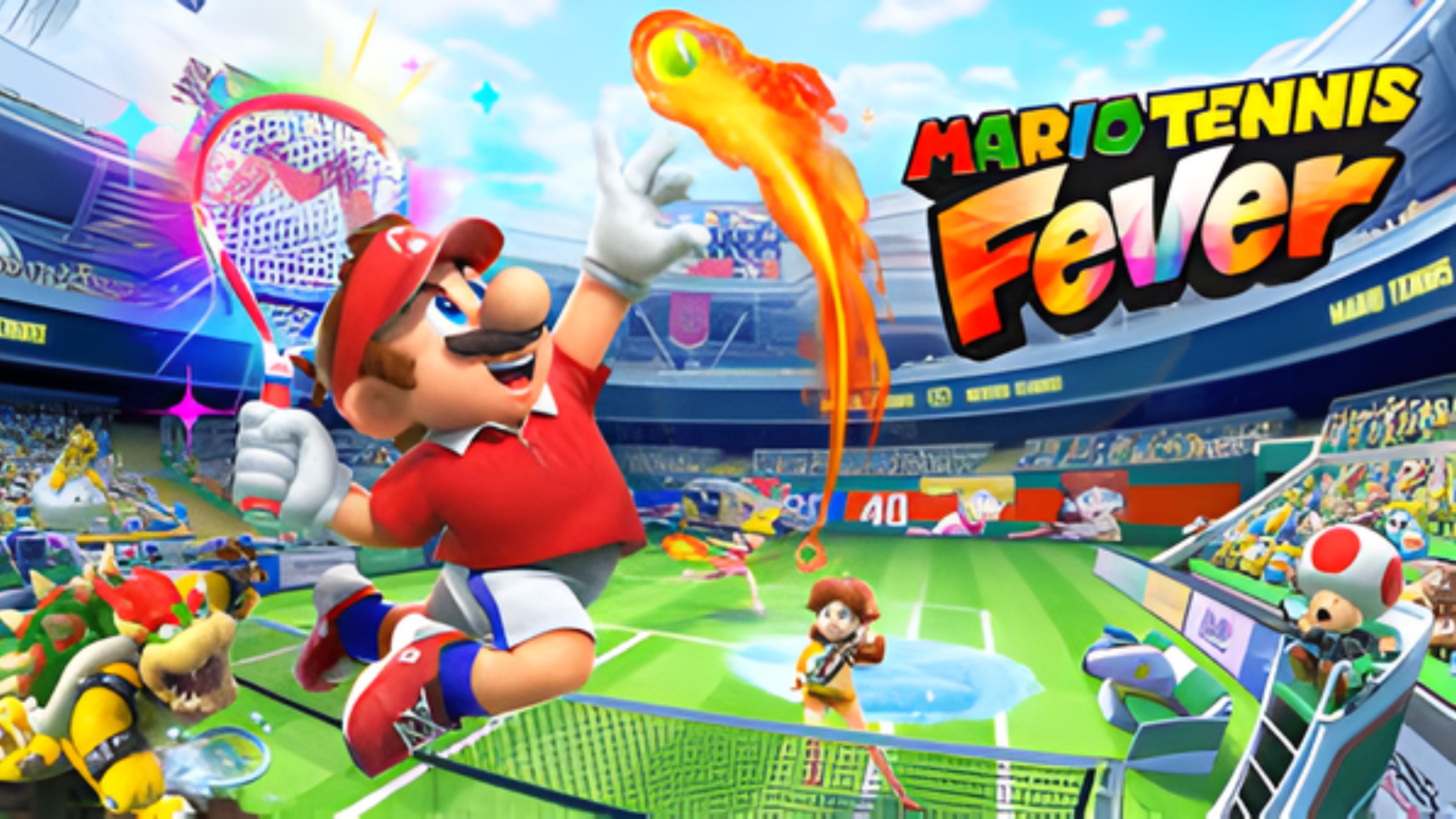
Let's get one thing clear from the jump: Mario Tennis Fever has no interest in being realistic. There are no ball physics lectures, no stamina meters, no agonizing over racket string tension. What it has instead is a Koopa Troopa sending a shell-infused smash that bounces off three walls before it finds your court square, and a Toadette whose slice shot leaves a trail of pink sparkles that temporarily blinds you. The courts themselves are characters — lava flows under Rainbow Road Stadium, Boo's ghost court dims the lights at the worst possible moment, and the jungle stage has cannonballs that randomly arc through the baseline.
This is the genius of the franchise's latest evolution: the tennis is real enough to feel satisfying, but the Mario DNA is cranked so far past eleven that every rally becomes a story. You're not just rallying — you're surviving.
The Controls Hit Different
One of the first things you notice firing up Mario Tennis Fever is how responsive and tactile the controls feel. There's a satisfying snap to every topspin, a noticeable weight behind each flat drive, and the timing windows for special shots are tight enough to make landing one feel genuinely earned. The game uses a four-shot system — topspin, slice, flat, and lob — layered underneath the character-specific "Fever Shot" that charges when you're on a hot streak, and the combination creates a skill ceiling way higher than the chaotic visuals suggest.
What's clever here is that the control scheme rewards learning without demanding it. Casual players mashing buttons will still have a blast, carried along by the spectacle and the forgiving hit detection. But dig a little deeper — master the timing on charged slices, learn which characters have the reach advantage on net approaches, figure out when to bait an opponent's Fever Shot and counter it — and the game opens up into something that genuinely tests your reflexes and reads. The depth is disguised behind the fireworks, which is exactly how it should be.
The Roster Is Wildly Uneven (In the Best Way)
Mario Tennis Fever's character roster feels like someone wrote down every personality type at a party and gave them all a racket. Mario himself is balanced and boring in the best way — the control character who does nothing flashy but wins consistently in steady hands. Bowser is all raw power, his groundstrokes hitting like a freight train but his court coverage suffering for it. Rosalina floats around the court like she's barely trying, her lob game absurdly dominant, but she crumbles if you keep her pinned to the baseline with pace.
Then there are the wildcard characters. Chain Chomp is a doubles-only unlock who bounces around the court like a pinball and is absolutely terrifying to play against. Kamek rewrites the rules of individual rallies with magic-based interference shots that change ball trajectory mid-flight. The Hammer Bro serves bombs. Actual bombs. Each character doesn't just feel different mechanically — they feel like a different philosophy of how to play the game, and finding the one that clicks with your style is half the fun.
Fever Mode Is Pure Serotonin
If you've never experienced a Fever Mode activation, here's the best way to describe it: imagine every good feeling you've ever gotten from a video game, compress it into four seconds, and attach it to a tennis shot. When your Fever meter maxes out — built up by landing clean winners, reading your opponent's shots correctly, and maintaining rally momentum — the court pulses, the music swells into something almost symphonic, and your next shot becomes something between a miracle and an act of aggression.
The Fever system also creates wild momentum swings that keep matches alive until the last point. You can be down 0-4 in a set, squeeze out two service holds, build your meter through desperation rallies, and suddenly you're right back in it with a Fever Shot that knocks your opponent to the opposite corner. Game design research points to this kind of "comeback mechanic" as one of the strongest drivers of player engagement — it keeps the outcome feeling uncertain even when the scoreboard suggests otherwise, and it means no match is truly over until the final ball drops.
The Single-Player Swings Hard
Mario Tennis Fever's Adventure Mode is the kind of single-player experience that studio could have phoned in and nobody would have complained — but they didn't. The story is ridiculous in the best way: a mysterious tennis curse is spreading across the Mushroom Kingdom, turning beloved characters into aggressive, serve-obsessed maniacs, and only you and your racket can cure them. Each chapter involves a boss tennis battle with unique rule modifications — you might face a possessed Yoshi who turns the court into a swamp mid-match, or a corrupted Donkey Kong who literally throws barrels between points.
These boss encounters require actual adaptation. You can't just bully them with your main strategy because the court conditions change the game entirely. A boss who halves your court size forces you to master drop shots and net approaches. One who doubles ball speed demands you shorten your backswing and rely on flat drives. It's clever game design wearing a party hat, and it means the single-player campaign teaches you skills that directly transfer to competitive play without ever feeling like a tutorial.
Multiplayer Is Where It Lives
Four-player local multiplayer in Mario Tennis Fever is one of the best couch gaming experiences available right now — full stop. The visual noise is thick enough to be hilarious, the comebacks are constant, and the gap between a skilled player and a newcomer is narrow enough that nobody sits quietly fuming while they lose 6-0. Doubles mode especially shines: communication becomes essential, court coverage turns into a negotiation, and the moment your partner accidentally deflects your Fever Shot into your own face, you'll laugh harder than you have at a video game in years.
Online ranked mode adds another dimension for players who want a more serious test. The matchmaking is quick, the netcode is surprisingly solid, and the ranked ladder has enough tiers to give you an honest picture of where your game actually stands. Watching high-level competitive clips of the game is a jaw-dropping experience — what looks like pure chaos at a casual level reveals itself to be a deep tactical exchange when both players know exactly what they're doing.
Why Now? Why This?
There's something culturally timed about Mario Tennis Fever landing when it did. After years of gaming trending toward epic open-world commitments and live-service exhaustion, there's a real hunger for games that deliver complete joy in a short session. You can pick up Fever for twenty minutes between meetings, have a genuinely thrilling experience, and put it down satisfied. No FOMO. No daily login requirements. No battle pass guilt. Just tennis, chaos, and Wario screaming when he misses a forehand.
A 2023 report from the Entertainment Software Association found that 65% of American adults play video games, and among them, the fastest-growing segment plays primarily in sessions under an hour. Mario Tennis Fever is built for exactly that demographic — people who want real engagement, real fun, and a game that respects their time enough to deliver a complete experience without asking for forty hours upfront. That's not a small thing. That's actually where gaming needs to go.
Should You Play It?
If you've ever enjoyed a Mario party game, a kart racer, or any sports title that prioritizes joy over simulation, the answer is an immediate yes. Mario Tennis Fever is the rare game that hits different with every type of player in the room — the competitive gamer finds the depth, the casual player finds the fun, and the person who "doesn't really play games" finds themselves suddenly invested in whether their Toad beats your Peach in a tiebreaker. It's a rare piece of design that doesn't ask you to meet it halfway.
The Mushroom Kingdom's tennis courts are loud, unpredictable, and occasionally on fire. And honestly? That sounds about right for right now. Step onto the court, let the Fever take over, and hold on.
📚 Sources
Entertainment Software Association. (2023). 2023 Essential Facts About the Video Game Industry. ESA. https://www.theesa.com/resources/essential-facts-about-the-us-video-game-industry/
Przybylski, A. K., Rigby, C. S., & Ryan, R. M. (2010). A motivational model of video game engagement. Review of General Psychology, 14(2), 154–166. https://doi.org/10.1037/a0019440
Juul, J. (2005). Half-Real: Video Games Between Real Rules and Fictional Worlds. MIT Press.