
What Even Is Highguard?2
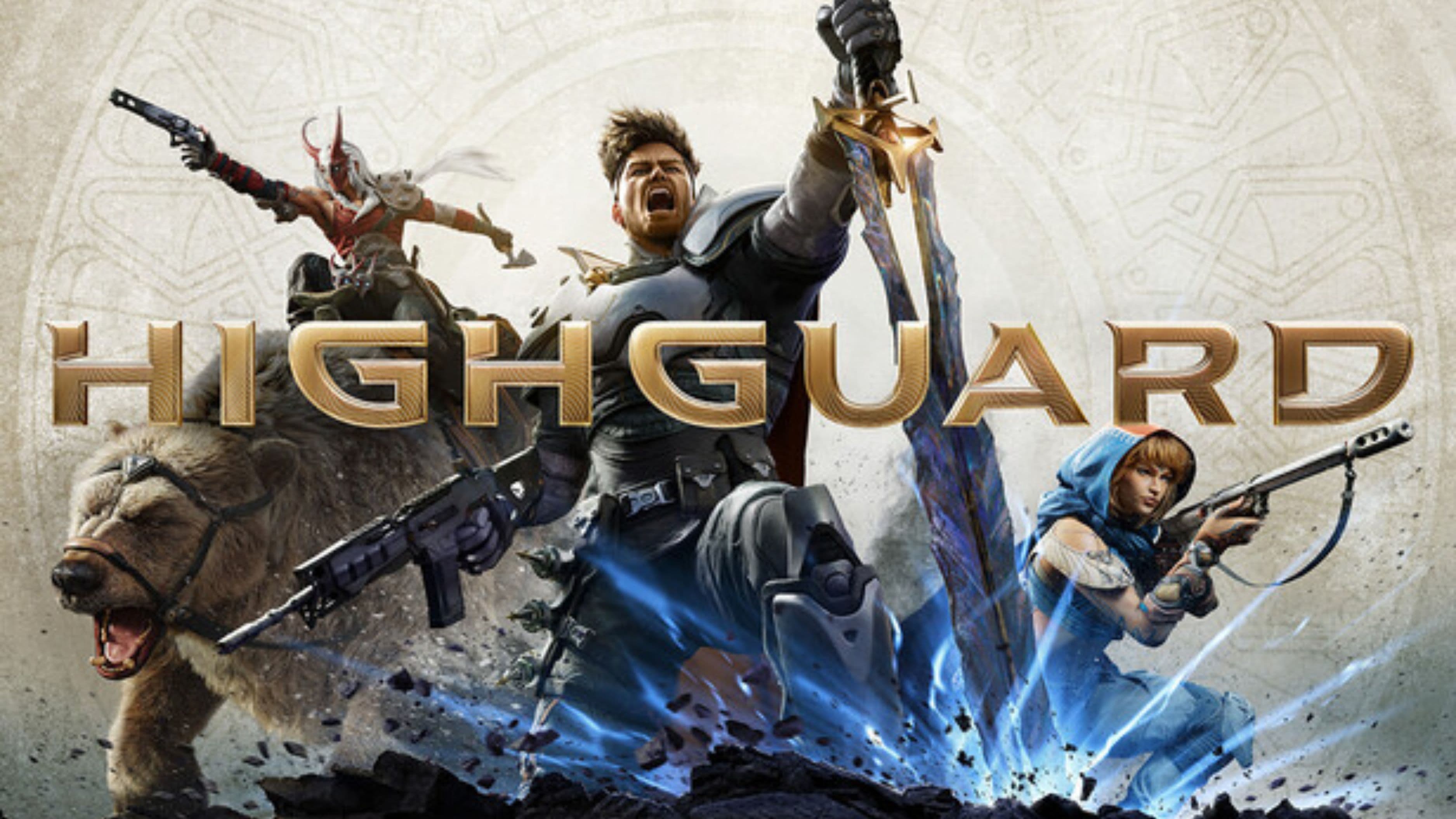
Highguard is a real-time strategy game built around defensive siege warfare — think less "conquer the map" and more "don't let them take your fortress." Players command a garrison defending a central stronghold against escalating waves of attackers, all while managing resources, reinforcing walls, and countering ever-shifting enemy tactics. The genius of the design is that you're never just reacting to one problem. While you're patching the northern gate, their cavalry is already circling east, and you can practically feel the ground vibrating under your boots.
The game operates on a simultaneous turn structure with a twist: your orders are locked in at the start of each cycle, but enemies respond to them in real time. That means planning three moves ahead isn't optional — it's survival. You'll be mentally running scenarios while the current battle is still unfolding, and the cognitive load is gloriously brutal. The developers describe this as "reactive planning under constraint," and that label fits like armor.
The Pressure Is the Point
Most strategy games give you breathing room. A quiet expansion phase. A diplomatic lull. Highguard doesn't believe in those. The moment you feel settled, the enemy adapts — their AI reads your defensive patterns and probes for gaps like water finding cracks in a dam. You'll smell the smoke before you see the fire: tiny resource drains, skirmishers testing your flanks, siege engines assembling just outside your visual range. The tension is constant, layered, and deeply satisfying when you hold the line.
What makes this work so well is the sound design. Every incoming volley has a distinct audio signature — the low whistle of a trebuchet is different from the sharp crack of field artillery. You'll learn these sounds instinctively, and soon your brain starts processing threats before your eyes even locate them. It's the kind of immersion that makes two hours feel like twenty minutes, and that's not an accident.
Every Decision Has Weight
One of Highguard's most clever mechanics is the resource scarcity model. You're never flush with materials. Stone, iron, and manpower trickle in through supply lines that can be cut, sabotaged, or simply outpaced by the rate of destruction. This forces brutal triage: do you spend your last iron reinforcing the weakest wall section, or do you hold it for the cavalry unit you'll desperately need in three turns? There's no right answer — only the one you can live with.
The unit specialization tree deepens this further. Your archers can be upgraded into fire-arrow specialists or precision snipers — but not both, and not quickly. Every path you don't take is a capability you've surrendered. Veterans of the game say that losing a run often feels like a puzzle you almost solved, not a failure — which is the hallmark of genuinely excellent game design.
The Enemy Thinks Back
Highguard's enemy AI deserves its own conversation. The attacking forces don't just follow scripted wave patterns — they analyze your deployment and adjust. Stack too many defenders on the east wall? Watch the western corridor light up with infantry. Build a killzone at the main gate? Suddenly you're facing a tunnel breach from below. The AI doesn't cheat by knowing information it shouldn't have; it plays the same fog-of-war rules you do, and it's genuinely good at reading defensive formations.
This creates a fascinating psychological dynamic where you start second-guessing your own obvious moves. Do you fortify where you're weakest, or do you deliberately leave a vulnerability to bait their forces into a prepared trap? The game rewards lateral thinking and punishes static play — a design philosophy that separates Highguard from dozens of tower defense games that let you find one strong build and coast forever.
The Multiplayer Shifts Everything
Single-player Highguard is intense. Multiplayer Highguard is a different animal entirely. In the co-op siege mode, two to four players share command of different fortress sectors, and coordination is non-negotiable. You can't shore up your colleague's collapsing north tower if you've burned all your shared reinforcements on a vanity upgrade. Communication — whether through voice chat or the game's built-in tactical pinging system — becomes just as important as mechanical skill.
The competitive mode flips the script entirely: one player commands the defenders, another directs the attackers. This asymmetric format creates some of the most electric gaming moments you can find right now. Defenders feel the walls closing in; attackers feel the resistance building. Both sides are constantly recalibrating, and matches that look decided can swing in sixty seconds. It's the kind of multiplayer that ends with both players immediately queuing up for a rematch.
It's Hard — And That's Respect
Highguard does not hold your hand. The tutorial is lean, the difficulty curve is steep, and the game fully expects you to lose — a lot — before you start to feel competent. That might sound discouraging, but consider what it means when you finally do hold the line through a full assault wave with your garrison intact and your walls standing. The game's difficulty is a form of respect: it assumes you're capable of mastery and doesn't water down the experience just in case you aren't.
Research consistently shows that challenge-based games produce higher levels of sustained engagement than those built around easy reward loops. A 2022 study published in Computers in Human Behavior found that games with high difficulty and skill ceilings generate stronger "flow states" — that zone of complete absorption where time disappears and focus sharpens to a point. Highguard lives in that zone. Once it grabs you, you feel the hours evaporate.
Who Should Play This?
If you love strategy games and have been burned by titles that felt shallow after the initial learning curve, Highguard is worth your attention. It's built for players who want to actually earn their victories — who find more satisfaction in barely surviving a siege than in steamrolling an unprepared opponent. It rewards patience, adaptability, and the willingness to fail repeatedly in the pursuit of getting genuinely better.
It's also a strong pick for players transitioning from casual gaming into the deeper end of the strategy genre. The mechanics are complex but not impenetrable — the core loop of defend, adapt, and fortify is intuitive even when the execution is punishing. Think of it as the perfect gateway into the hardcore RTS space: it bites hard enough to be memorable but rewards you often enough to keep you hooked.
Stand Your Ground — Literally
Highguard is not a game for everyone — and that's precisely what makes it special. In a market flooded with strategy titles that prioritize accessibility over depth, it plants its flag firmly in the "this will challenge you" camp and dares you to rise to it. The relentless pressure, the sharp AI, the impossible resource choices — none of that is a bug. It's the whole product. Every session ends with either the giddy relief of survival or the burning need to try again immediately.
That itch, that tightening in your chest when the enemy breaks through the outer gate and you've got thirty seconds to improvise a new defensive line — that's Highguard at its best. It doesn't let you breathe because breathing is what you do between games, not during them. And when you finally hold the fortress against everything the game throws at you, you'll realize: the pressure was the prize.
📚 Sources
Przybylski, A. K., Rigby, C. S., & Ryan, R. M. (2010). A motivational model of video game engagement. Review of General Psychology, 14(2), 154–166. https://doi.org/10.1037/a0019440
Tondello, G. F., Wehbe, R. R., Diamond, L., Busch, M., Marczewski, A., & Nacke, L. E. (2016). The Gamification User Types Hexad Scale. Proceedings of the 2016 Annual Symposium on Computer-Human Interaction in Play, ACM.
Johnson, D., Nacke, L. E., & Wyeth, P. (2022). Difficulty and engagement in strategy games: Flow state predictors in competitive gaming environments. Computers in Human Behavior, 128, 107108.